
Ideavo
Ideavo is a free AI full-stack app builder that turns chat prompts into deployable web, mobile and internal tools, with BYOK model access, generated backends and GitHub export.
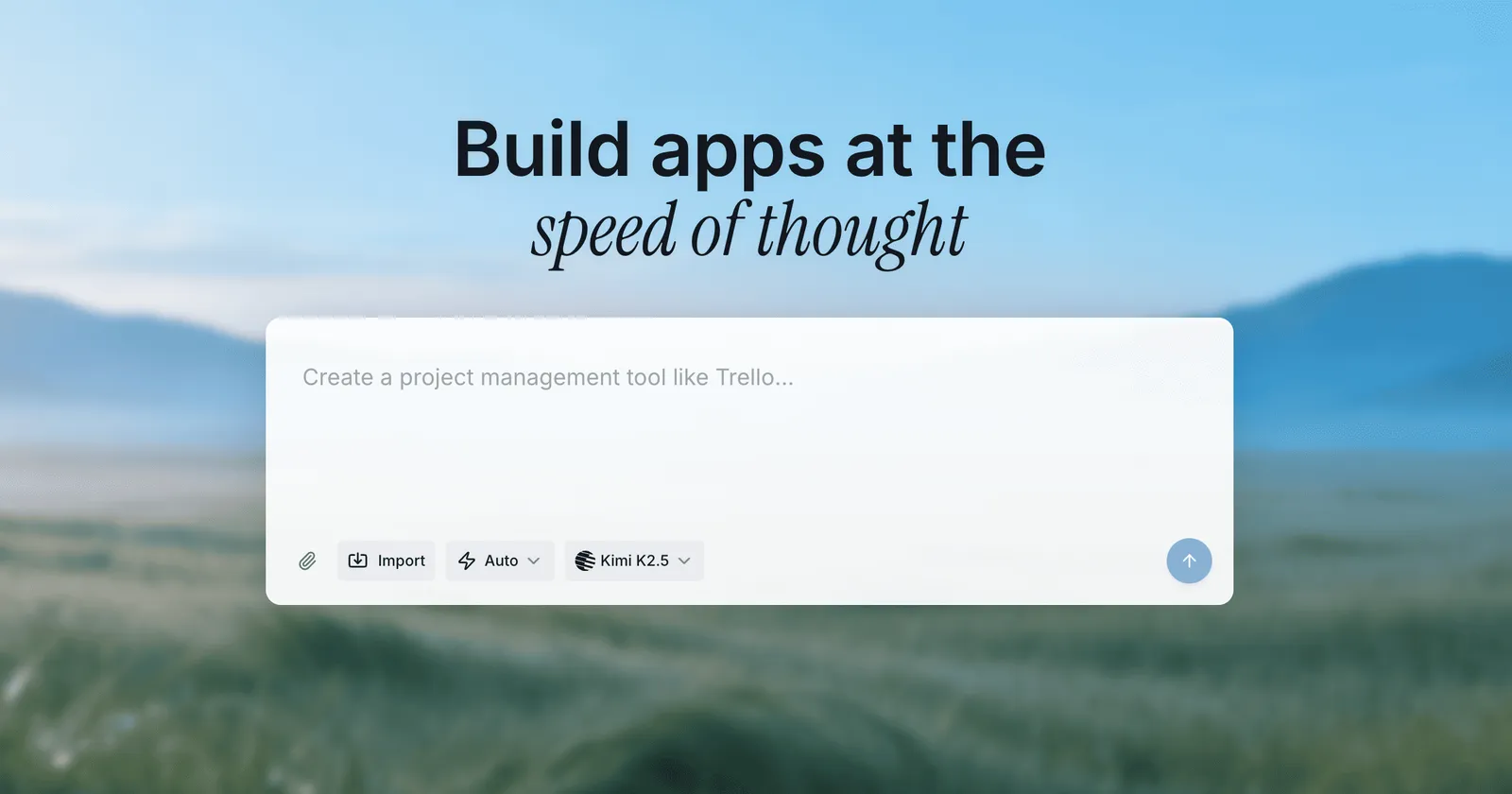
About Ideavo
Overview
Ideavo is a free, AI-powered full-stack app builder that converts natural-language chat into production-ready websites, mobile apps, internal tools and games. It pairs a browser IDE with automatic backend generation covering authentication, databases, payments and business logic.
Core Capabilities
- Bring your own model: connect existing OpenAI, Anthropic, Google or OpenRouter keys without token markup.
- Automated backend: auth, persistence, permissions and payment logic scaffolded next to the frontend.
- Multi-target output: one codebase targeting web, mobile and game builds.
- Agentic tooling: parallel agents, MCP servers, reusable skills and custom workflows.
- Deployment plumbing: repository import, GitHub export, Vercel releases and custom domains.
Enterprise and Team Use
SOC 2 certification, encryption at rest, audit trails and SSO support target regulated teams. Shared sessions and real-time collaboration let multiple builders edit the same project simultaneously.
Who It Serves
Product managers prototype before sprint planning, founders validate MVPs ahead of fundraising, agencies compress client delivery, and engineers skip boilerplate. Pricing inverts typical AI builder economics: the platform is free, while inference runs on the user's own provider subscription.
Practical Considerations
Output quality tracks the selected model and prompt specificity, since generation depends on external providers. Code export limits lock-in, though generated backends still warrant review before production deployment.
Pros
- Free to use with bring-your-own-key model access, eliminating the per-token markups charged by comparable AI app builders.
- Automatically scaffolds backend concerns such as authentication, database schema, permissions and payment logic alongside frontend code.
- Provider-agnostic integration supports OpenAI, Anthropic, Google, OpenRouter and other subscriptions from a single interface.
- GitHub import/export, Vercel deployment and custom domain wiring reduce vendor lock-in compared with closed builder platforms.
- Enterprise controls including SOC 2 certification, SSO, audit trails and real-time team collaboration suit regulated organizations.
Cons
- Inference costs sit outside the platform, so users must supply and pay for their own API key or subscription.
- Generated backend code and business logic still require developer review before it is production-safe.
- No public open-source repository is offered, which limits code-level transparency and self-hosting options.