
Checkout Saver
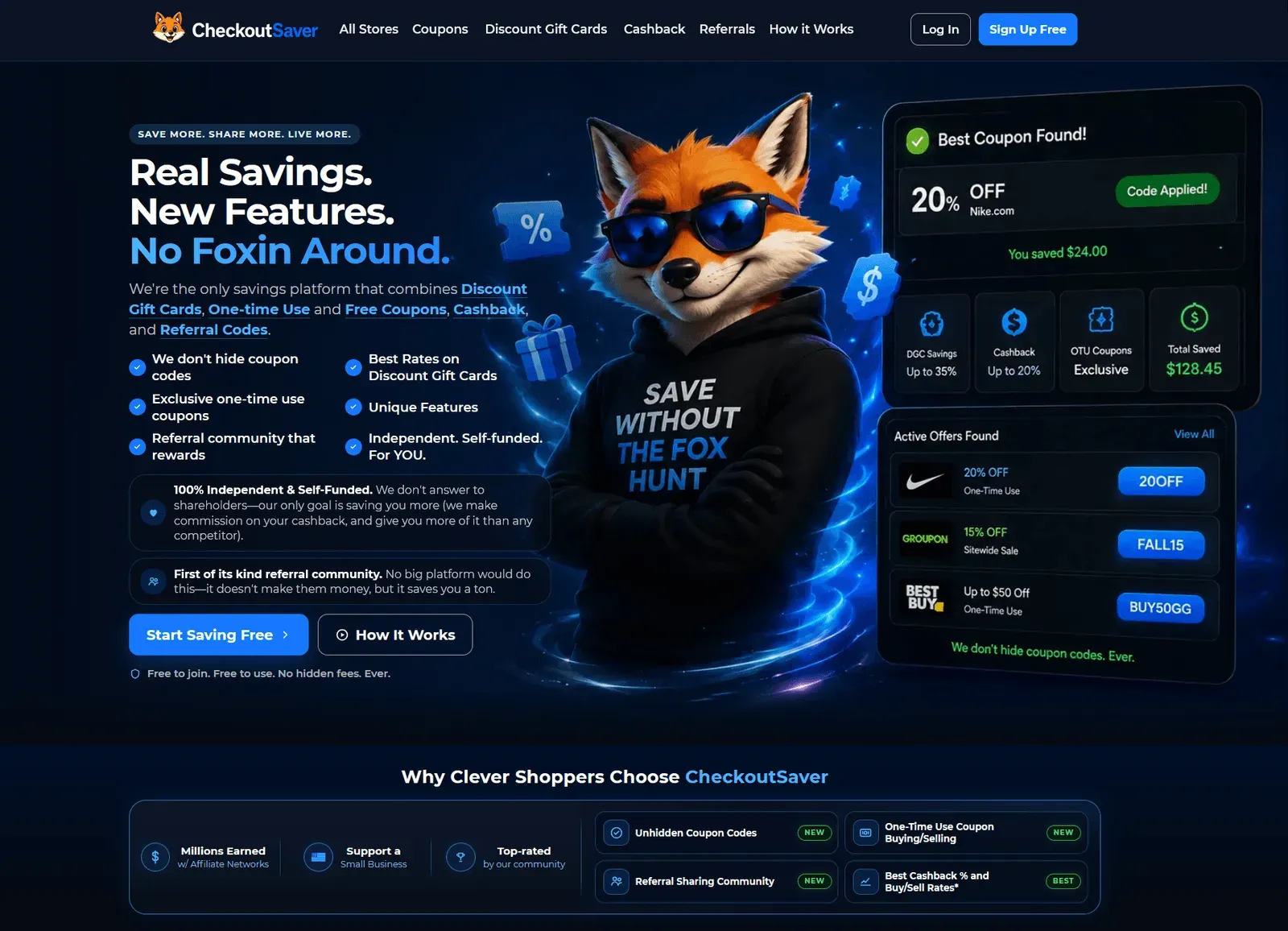
Checkout Saver is an independent savings platform that transparently combines coupon codes, cashback, discounted gift cards, one-time-use deals, referrals, and extra tools like an eBay sniper and price-drop tracker for everyday online shoppers.
About Checkout Saver
Introduction
Checkout Saver is an independent, self-funded savings platform that aggregates multiple money-saving mechanisms into a single account. Unlike typical coupon sites that hide codes or require browser extension installs before showing deals, it publishes free coupon codes openly, and then layers on cashback at over 5,000 stores, discounted gift card buying/selling, one-time-use coupon exchange, a referral sharing community, and niche tools like eBay bid sniping, warranty tracking, and price-drop alerts. This review examines how the platform works, its core features, practical use cases, and whether the value proposition holds up against mainstream competitors.
Key Features
Checkout Saver’s primary value is its six-in-one savings approach, all accessible after a free registration. The following features stand out from the homepage and supporting pages.
- Unhidden Free Coupons: Most coupon sites force users to click “reveal code” or install an extension to see the actual text. Checkout Saver displays coupon codes directly on retailer pages, no signup gate for browsing. This transparency is a rare trust signal in the industry.
- Cashback Program: The platform passes a higher percentage of the affiliate commission back to shoppers than larger competitors. Rates vary by store but the site advertises earnings up to 35% at some retailers, with typical rates in the 1–10% range. Cashback is credited to the account and can be withdrawn via PayPal or cryptocurrency options.
- Discount Gift Card Marketplace: Users can buy gift cards at below face value (claimed up to 35% off for some brands, and often 10–20%) and use them instantly at checkout. The platform also buys unwanted cards from users, advertising “highest rates” in the industry—important for those with unused gift card balances.
- One-Time Use (OTU) Coupons: Exclusive to the platform, OTU coupons are unique codes that can only be used once. Shoppers can buy these from other members or sell their own unused codes. This is a niche marketplace not found on mainstream coupon aggregators.
- Referral Sharing Community: Checkout Saver built a dedicated section where members can share and find referral codes for hundreds of stores. This is a community-driven feature that bypasses the usual “invite friends” bars, turning referral sharing into a public utility.
- Browser Extension: The Chrome extension (with Safari/Firefox versions likely in development) automatically scans pages for applicable coupons and cashback, and can apply codes at checkout. It surfaces savings opportunities without the user having to visit the site each time.
- eBay Tools: Two distinct features target eBay power shoppers. “Won1” is a scraper tool that helps users find eBay items that ended with no winner or were relisted, while “Bid Sniper” automates last-second bidding to improve winning odds.
- Receipt & Warranty Tracker: Users can upload digital receipts and get reminders for warranty expirations—useful for tracking major purchases.
- Price Drop Protection: The platform monitors price changes on purchased items and alerts users when a price drops, enabling them to request an adjustment from the retailer.
- Credit Lab: This is a free credit score monitoring tool that provides users with their FICO-like score and educational content, implemented without impacting credit history.
Extra features like the eBay sniper directly address auction-frustration, and the warranty and price drop tools add tangible post-purchase value. Checkout Saver may lack the sheer volume of retailers seen on Rakuten or Honey, but it differentiates itself by vertical integration of features that typically exist as standalone apps.
How It Works
The first step is creating a free account using email or social login. Once registered, the dashboard centralizes every method. To earn cashback, users search for a participating store from the cashback store list, click the “Shop Now” link, and make a purchase at the original retailer. The browser extension can also track purchases automatically if installed.
For discount gift cards, the flow is straightforward: browse the marketplace for brands like Amazon, Target, or Best Buy, pay through Checkout Saver’s secure checkout (which accepts PayPal and several cryptocurrencies), and receive the card code immediately. Selling is similar—users provide card details, receive a quote, and upon acceptance the balance transfers to their Checkout Saver wallet.
One-time-use coupon buying is structured as a peer-to-peer transaction. Sellers list unused codes with proof of validity; buyers purchase using the platform’s escrow service to mitigate fraud. Referral codes are actively listed in the community section, and members can post requests for specific services.
The extension acts as a seamstress across all these features. When a shopper visits any of 5,000+ supported retailers, the extension automatically searches for active free coupons, checks cashback rates, and displays any applicable discounts at checkout. It also lets users manually trigger cashback tracking if the automatic process fails.
Use Cases
The platform appealed to several shopper archetypes:
- Budget-Conscious Online Shoppers: Everyday purchases—groceries, household items, clothing—can run through Cashback and discount gift cards. Stacking a coupon, a discounted card, and cashback can produce a combined saving of 20–40%.
- eBay Users: The built-in bid sniper and Won1 tool are a practical fit for active bidders. Sniper eliminates the need for third-party software; Won1 helps uncover listings that ended without a sale but may have leftover inventory.
- Gift Card Liquidators: Anyone holding unused gift cards can sell them at higher rates than typical card exchange sites. The platform makes a particular effort to win this segment with competitive pricing and crypto payout options.
- Small Business Owners: Frequent business purchases—shipping, software, office supplies—can benefit from cashback and price drop alerts. For example, FedEx branded stores in the network are usable for small parcel shipments.
- Referral Sharers: The referral exchange community enables people to freely swap invitation codes for services like Robinhood, Wise, or Airbnb. This is especially valuable for influencers and deal hunters who often have a queue of unused codes.
Pricing & Value
Checkout Saver’s core value proposition is that it charges no fees and takes no hidden revenue. Joining is free, coupon access is free, cashback is paid in full, and using the extension has no cost. How does the company sustain itself? It receives affiliate commissions from retailers when users make purchases through its links, then splits that commission with its users—typically keeping a smaller share than established platforms. The company is self-funded and independent, which it claims allows it to return a higher percentage to members.
The discount gift card marketplace is a marketplace, not a fee-based service; Checkout Saver makes money on the spread between buy and sell prices, similar to other card exchanges. One-time-use coupons involve a transaction fee embedded in the purchase, but rates are visible up front. The platform clearly states that all remaining revenue comes from retailer commissions, and users can see their own earnings dashboard.
Given that most comparable services (Rakuten, Honey, TopCashback) rely on massive marketing budgets and often monetize via data sharing, Checkout Saver’s transparency about its independence is a practical differentiation. Of course, cashback rates can fluctuate, and some high-value OTU coupons command a premium, so the “value” is ultimately proven by the deals available at the moment.
Final Verdict
Checkout Saver is an ambitious aggregation of nearly every online savings trick available: unhidden coupons, cashback, discounted gift cards, OTU coupons, referral sharing, and auxiliary tools like eBay sniping and price tracking. Its main strengths are transparency and feature breadth. The pre-announced coupon codes, visible without signup, are a strong trust signal. The referral community and OTU marketplace bring network effects that become more valuable with more users. The extension works across major retailers and automates a lot of tedious work.
The cons are mostly related to scale. As a younger, independent platform, its cashback retailer network—while advertised at 5,000+ stores—may not yet have complete coverage of niche brands that larger rivals carry. OTU coupons and referral community are only as good as the participation level; early adopters might see limited inventory. There is also no dedicated mobile app, and using all features requires desktop browser access or a heavy reliance on the extension.
For deal-savvy shoppers who are already stacking coupons and taking advantage of cashback portals, Checkout Saver’s platform (link to /all-stores) offers a fresh set of tools to consolidate savings. Those who frequently buy gift cards or have unwanted cards to sell should compare the published buy rates against competitors. The only way to judge the referral community and OTU marketplace is to see the current listings for themselves. Overall, it is a genuine attempt to create an all-in-one savings hub, and its independence from big retailers gives it a user-friendly angle—worth exploring for any online shopper who enjoys a good bargain.
Pros
- Coupon codes are displayed directly on retailer pages without requiring account creation or extension clicks, which builds immediate trust.
- The platform combines cashback, discount gift cards, one-time-use coupons, referrals, and practical utilities like an eBay sniper and price-drop alerts into one unified account.
- Independent and self-funded, Checkout Saver passes a higher share of retailer commission to users than large competitors that rely on data monetization.
- The first-of-its-kind referral community and OTU coupon marketplace are not available on mainstream savings sites, giving members exclusive ways to save and trade.
- Free registration and no-fee policy, plus the availability of crypto payouts for cashback and gift card sales, make it convenient for a variety of users.
Cons
- As a relatively young platform, its 5,000+ store network may still have less coverage of small or niche retailers compared to established cashback portals.
- The OTU coupon and referral community depend on active user participation; new members might find limited inventory or fewer matched requests early on.
- There is no native mobile app, and many features work best through the desktop browser extension, which can frustrate mobile-first shoppers.